
Smart Security for Rail Tracks and Tunnels

Senstar leverages Blickfeld LiDAR for reliable people detection in railway applications

Overview

rail track and tunnel security

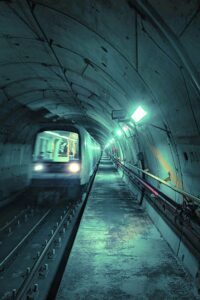
The operator of a high-security transport facility was looking for a dependable way to monitor both the track bed and the tunnel area. The goal was to detect people early and prevent unauthorized access to the tunnel, and therefore restricted security zones, even while trains were in operation.

Camera-based systems rely solely on two-dimensional image data and therefore cannot accurately determine an object’s distance or height. Without any depth information, they can only identify people reliably when no train is in the field of view. During a train passage, misinterpretations become inevitable: movement, light reflections, or structural elements of the train make it impossible to clearly distinguish a person in the scene.

This lack of depth perception became a major limiting factor, resulting in no active monitoring of the tunnel and track area despite significant security needs.


Challenge

The end customer was facing a complex challenge: traditional video-based analytics systems provided only two-dimensional image data and therefore could not capture spatial depth. This became particularly problematic whenever a train was in motion. Structural features or light reflections from the train were frequently interpreted as additional objects, leading to numerous false alarms and making it nearly impossible to reliably detect a person. This issue is especially evident in situations where a person walks parallel to a slowly approaching train or stands in its shadow. In such cases, they are hardly detected as a separate object in a 2D image. As a result, people could only be reliably detected when no train was in the camera’s field of view, which posed an unacceptable limitation during live operations.

There was also a significant security risk: if a person entered the area unnoticed, they could gain access to the tunnel and sensitive internal infrastructure, potentially leading to serious consequences. 

In addition, the required outdoor installation of the sensors in front of the tunnel posed its own challenges. Camera-based systems often require additional installation measures such as external lighting and tend to experience performance issues in challenging weather. Due to the lack of a suitable technological solution, the area had long lacked active monitoring despite the urgent need to detect unauthorized access at an early stage to effectively prevent potential hazards.

Solution


In close collaboration between Blickfeld, Senstar, and an installation partner commissioned by Senstar, Blickfeld’s QbProtect LiDAR sensors were deployed on site. Two sensors were installed approximately 15 meters in front of the tunnel entrance on masts about four meters high, providing full coverage of both the track bed and the tunnel area. Thanks to three-dimensional detection, security personnel now have access to precise spatial analysis of the entire zone for the first time, covering ground level all the way up to the tunnel ceiling.

The LiDAR sensors accurately capture the height, distance, and movement patterns of objects, enabling reliable detection of people even when they are walking parallel to a train or partially obscured by train structures. These are exactly the scenarios in which traditional 2D analytics systems reach their limits.

Another key advantage of QbProtect is its independence from lighting conditions: the system performs reliably even in poor visibility or complete darkness, where conventional camera or video analytics systems are nearly blind. The 3D data is processed directly on the device, and alarm events are transmitted straight into the existing Senstar Symphony Video Management System – an essential decision-making factor during the selection process.

As part of the system configuration, an object-based security zone was defined in which only people trigger an alarm. Movements caused by small animals or other irrelevant objects are reliably filtered out. When an event is detected, QbProtect automatically sends the signal to Senstar Symphony, where it is then verified by a thermal camera. This combines precise 3D data with visual confirmation. As a result, reliable distinction between a train and a human object is now possible, even during ongoing train operations.

Results

With QbProtect, the end customer now has a fully functional and reliable solution for securing the track and tunnel area. Implementation proceeded smoothly, without any technical challenges during installation or integration. Security in the monitored area has been significantly enhanced, while false alarms remain very low. In particular, the ability to reliably distinguish between trains and people during live operations represents a major advancement over the previous situation.

With QbProtect, we now have a reliable technology to monitor track beds and tunnel areas, even during train operations. The solution provides exactly what we’ve been missing for years: the ability to accurately distinguish between trains and people, thanks to the depth information provided by 3D LiDAR.
John Rosenbusch
Sales Director DACH at Senstar GmbH
Outlook

absicherung von gleisbett

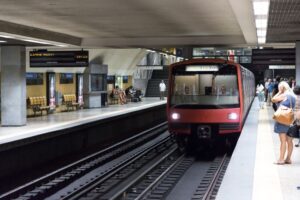
The operator is already planning to extend the solution to another tunnel section. Senstar also sees potential for deploying 3D LiDAR technology in many other safety-critical environments, including subway stations, train stations, and industrial settings.


Share Case Study
Facebook
Twitter
LinkedIn
XING
WhatsApp
Email
Contact

Contact us to discuss your application!

Search