
Exclusive residential properties place special demands on security concepts. It is not only about protection against burglary, but about safeguarding high-value assets, private retreats, and architecturally sophisticated environments. Conventional alarm and surveillance solutions that work in standard residential settings often reach their limits here. Perimeter protection, in particular, requires technologies and concepts that go far beyond the usual standard.
Why High-End Residential Properties Form Their Own Security Class
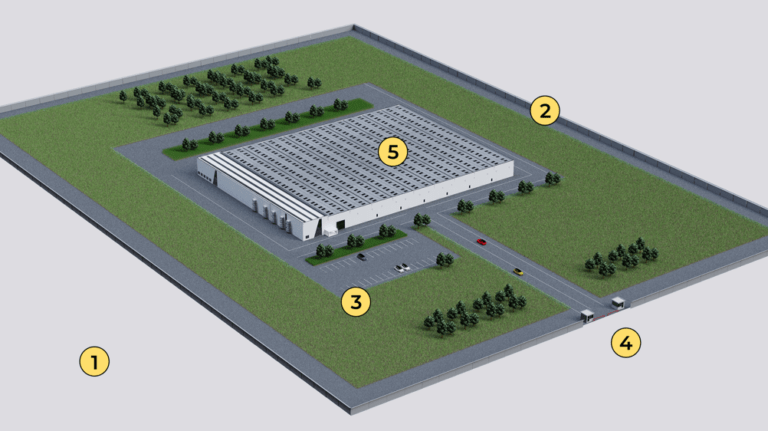
Luxury and premium properties differ not only in value, but above all in their structure. Large plots of land, extensive gardens, hillside locations, or proximity to forests and green spaces are not exceptions, but rather the rule. In addition, there are often multiple access points, terraces, outbuildings, or open transitions between indoor and outdoor areas.

System integrator Horst Geier from Alarmstudio summarizes it well: “Especially in high-end residential properties, the environment is usually far more complex than in conventional homes. Outdoor areas are large, open, and often directly connected to nature.”
These conditions significantly increase the complexity of securing such properties. At the same time, tolerance for false alarms is particularly low in this segment. Residents expect a system that provides reliable protection without disrupting daily life through unnecessary alerts.
False Alarms as a Critical Acceptance Factor
In practice, many outdoor surveillance systems fail precisely at this point. Conventional, mostly 2D-based sensors are highly sensitive to environmental influences such as wildlife, fog, snowfall, irrigation systems, or moving vegetation.
Horst Geier explains: “False alarms are often a problem. If a system constantly triggers due to animals or weather conditions, the customer quickly loses trust.”
The consequences are well known: alarms are ignored, systems are disarmed, or sensitivity is reduced. This leads to a significant loss of protective effectiveness – an unacceptable situation for exclusive residential properties.
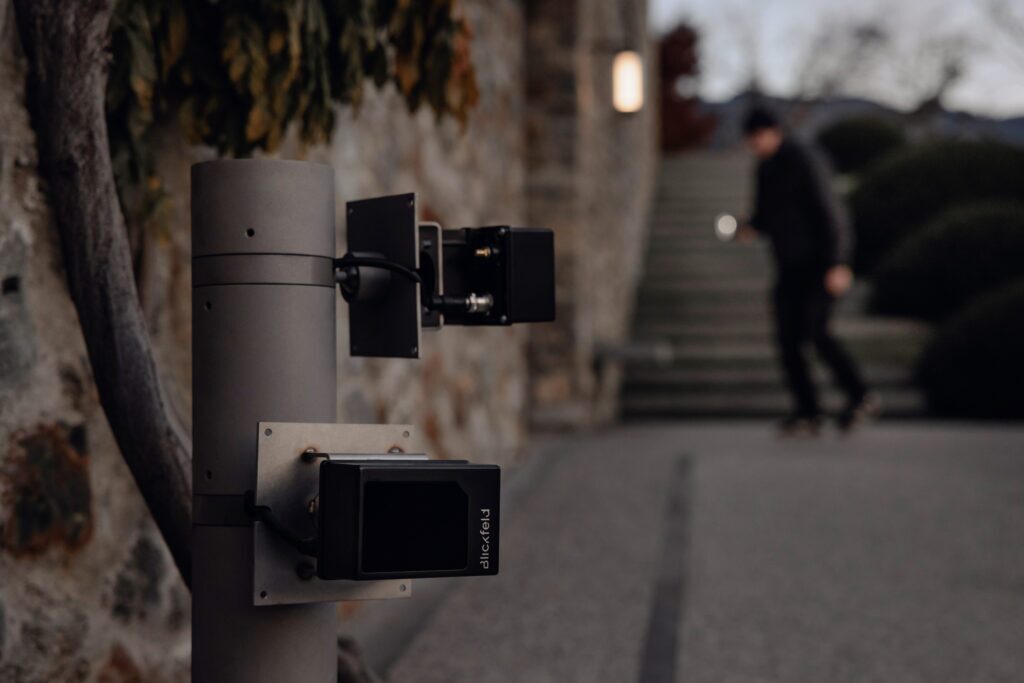
Perimeter Protection with 3D LiDAR as a Technological Response
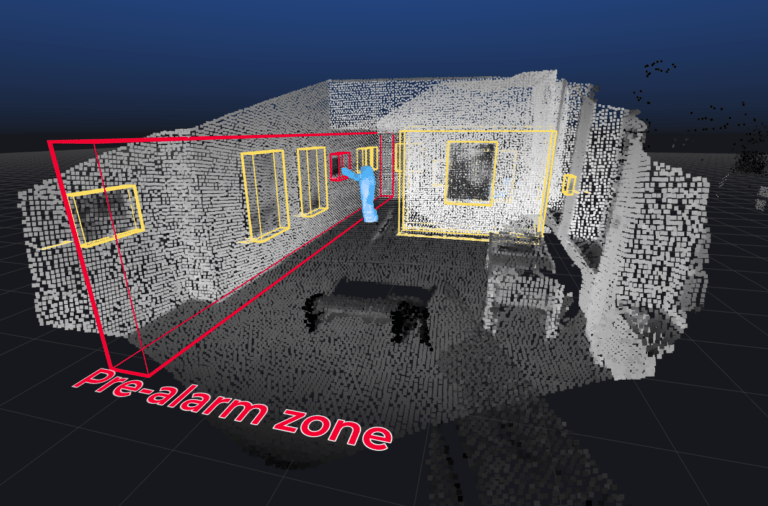
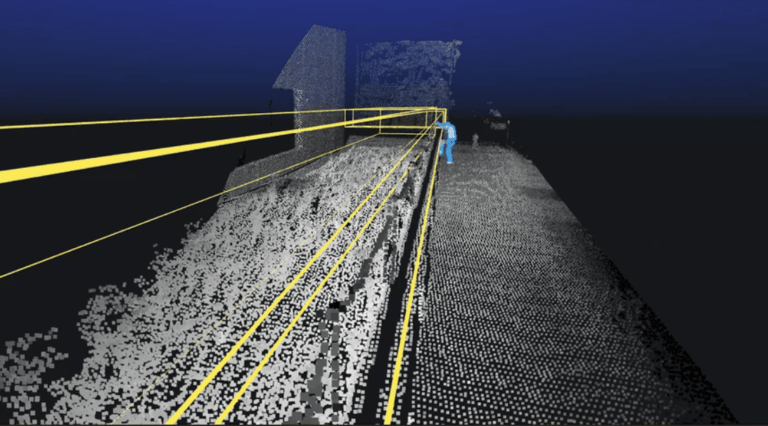
3D LiDAR is therefore playing an increasingly important role in modern security concepts. Unlike traditional 2D systems, this technology captures space volumetrically. Instead of analyzing lines or surfaces, it generates a three-dimensional point cloud of the environment, in which height, volume, and movement dynamics of an object can be evaluated.
From an integration perspective, this is a decisive advantage: “With 3D data, we can clearly distinguish humans from animals – even in fog, snowfall, or complete darkness,” says Geier. “This level of stability is extremely important in outdoor surveillance.” Especially for large properties with natural environmental influences, this technology offers significantly higher operational reliability.
Multi-Level Alerting Instead of All-or-Nothing
Another key aspect is system architecture. In exclusive residential properties, perimeter protection is rarely a standalone solution. Instead, it is part of an integrated security concept consisting of:
- Outdoor and perimeter sensors
- Cameras
- Intrusion detection systems
- Video management systems
Rather than following a simple “alarm or no alarm” principle, multi-level security concepts are often implemented. An initial intrusion may trigger a pre-alarm, for example through lighting control or a notification. Only when further intrusion into critical zones occurs does escalation follow. For residents, this means greater control; for security services, improved event verification.
Architecture and Security – a Delicate Balance
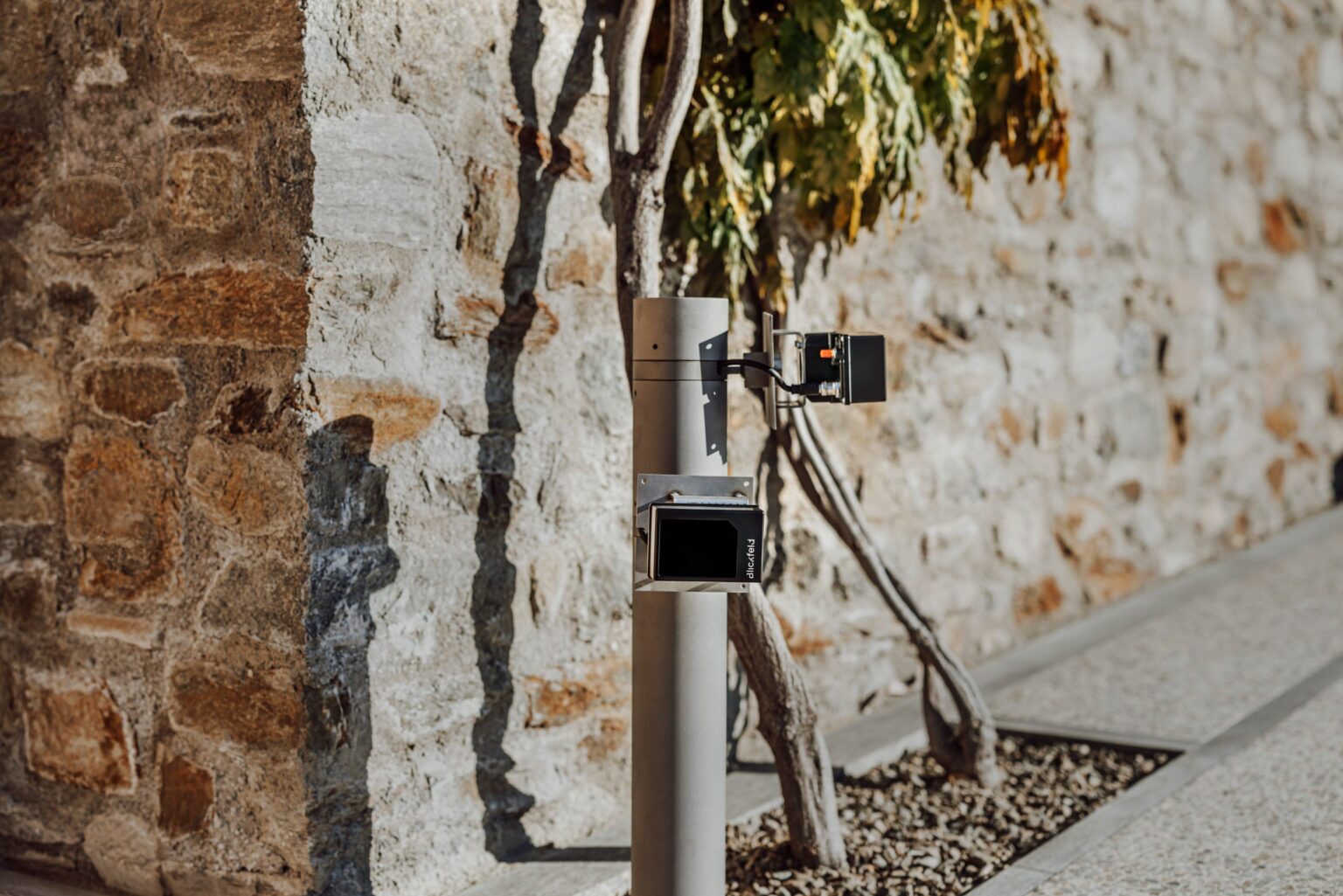
Especially in the premium segment, integrating security technology into architecture and landscape plays a central role. Sensors, cameras, and detectors should remain as unobtrusive as possible and not interfere with the overall design concept.
This creates additional technical requirements: compact designs, flexible mounting options, and the ability to implement custom brackets or installation concepts.
Geier describes this challenge as follows: “The requirement is often very clear: security, yes – but please not visible. Technology must integrate into the building and garden without appearing dominant.”
Compact designs, flexible installation options, and customized mounting solutions are therefore essential components of modern security concepts in this segment. At the same time, the technology must be easy to retrofit discreetly as well as seamlessly integrated into building plans from the outset.
Data Protection as a Key Argument
An often underestimated aspect is data protection. Many owners of exclusive residential properties are critical of traditional video surveillance, whether for personal reasons or due to concerns about neighbors and privacy.
3D-based perimeter protection offers a clear advantage here. The captured LiDAR data consists of anonymous point clouds that do not allow conclusions about identities. Faces or personal characteristics are not recorded. This makes it possible to achieve a high level of security without compromising privacy.
Conclusion: Security Beyond the Standard
Securing exclusive residential properties is a discipline of its own. It requires robust technologies, well-thought-out system integration, and a realistic understanding of environmental influences and user behavior. Standard solutions are often insufficient in this context.
Experience from integration practice shows: modern LiDAR-based perimeter protection enables reliable detection, reduces false alarms, can be integrated discreetly into architecture, and meets high data protection requirements. Those who build beyond the standard should also set new benchmarks in security.
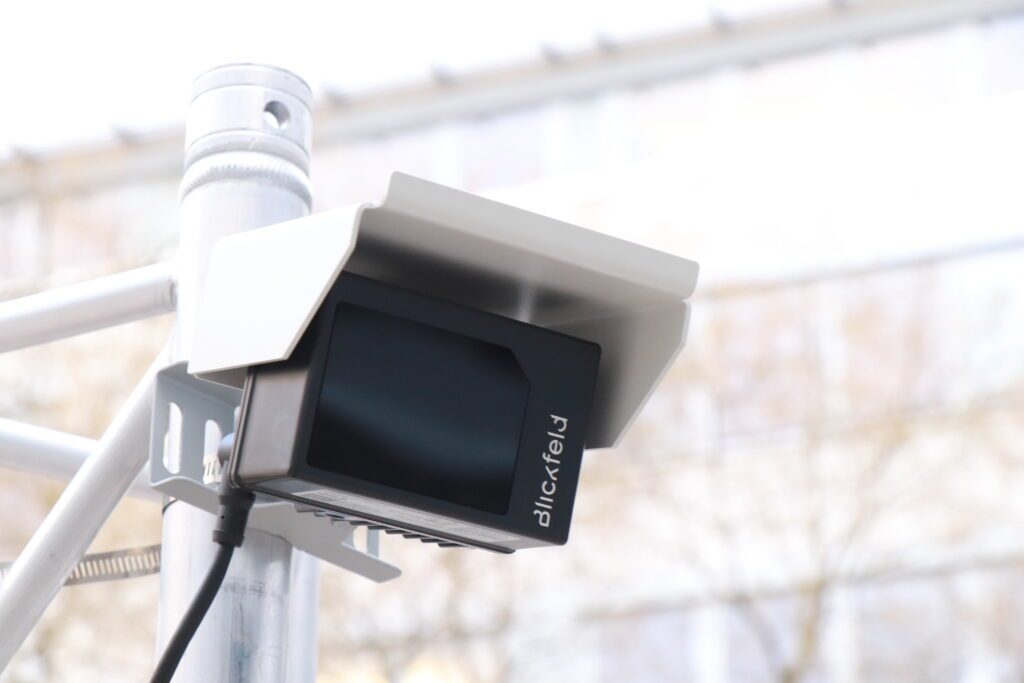
A concrete example of a LiDAR sensor used in exclusive residential properties is the Blickfeld QbProtect. The QbProtect is a 3D LiDAR-based security sensor designed for reliable perimeter monitoring in outdoor environments.
- 3D LiDAR sensor with integrated real-time data processing (edge processing)
- Configurable 3D detection zones for flexible perimeter and area monitoring
- Object classification and tracking to distinguish relevant events
- Event-based alarm logic with freely definable trigger conditions
- Direct integration into video management and security platforms (e.g., via ONVIF)
- Robust outdoor design for continuous operation under demanding environmental conditions